
Spis treści
ToggleFloor, countertop or hanging store display – which is best?
In today’s retail environment, the way products are presented is just as important as their quality. Visual appeal plays a huge role in capturing customer interest, as most people tend to buy what catches their eye. That’s why a well-chosen store display is not just an aesthetic accessory but an actual sales support tool. Let’s take a look at which type of display to choose to achieve the best results.
What Is a Store Display and What Is Its Purpose?
A product display is a special structure designed to make a product stand out from others and direct the customer’s attention to a specific brand or offer. A carefully designed display can attract customers, highlight the advantages of the presented assortment, and increase its appeal. Such solutions can be easily customized to match a brand’s visual identity, helping to build recognition and a positive image. Well-organized display space also helps maximize the use of store space, which is especially valuable in small retail locations.
Floor Displays – Where Do They Work Best?
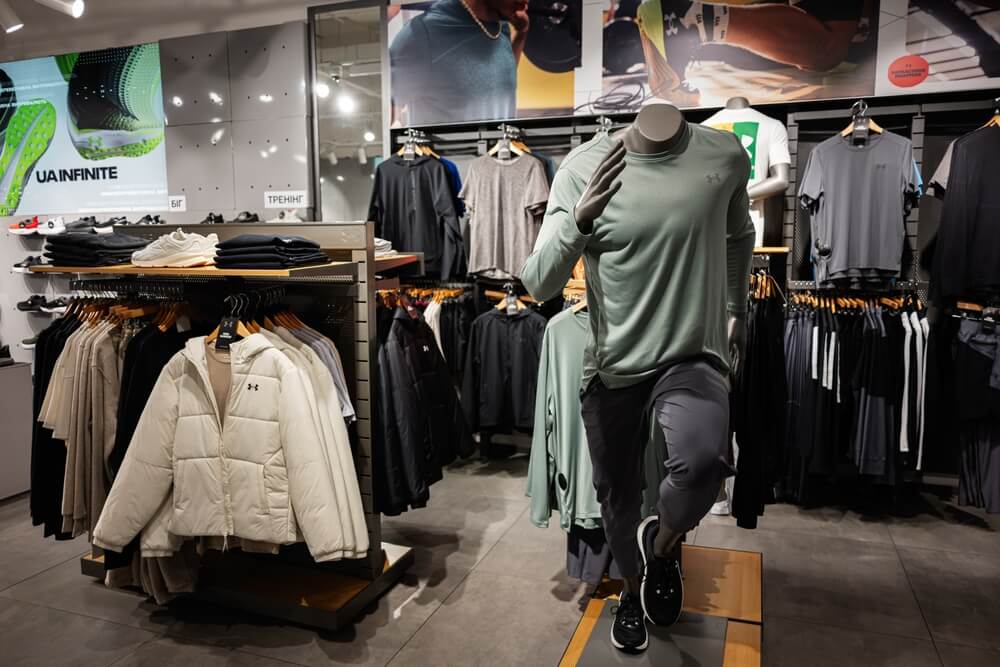
Floor displays are placed directly on the shop floor. They remain a classic merchandising tool and are most often used in large retail spaces, although they can also work in smaller stores. A floor display allows products to be arranged at different heights, giving customers the chance to view each item in detail.
Countertop Displays – Applications
Countertop, or table, displays are promotional tools used to showcase products near store counters, cash registers, or on shelves by the entrance. They are perfect for selling so-called impulse products – those customers may choose spontaneously, for example, while waiting in line at the checkout. Countertop displays are compact, so they can be used in virtually any retail space, even in stores with limited square footage. The ability to personalize their form and print makes them easy to adapt to the product or store style.
Hanging Displays – Making the Most of Store Space
Hanging displays are mounted on walls, grids, or special frames, allowing for efficient use of store space. This type of promotional tool works well in locations where there’s no room for a floor or countertop display. It’s also a great way to place products at customers’ eye level – an effective method to spark interest in specific goods.
In conclusion, store displays are versatile accessories that help highlight certain products. There’s no single solution that works for every store. In larger spaces, all three types of displays can be used, while in smaller stores, they should be tailored to the type of products and specific marketing goals.