
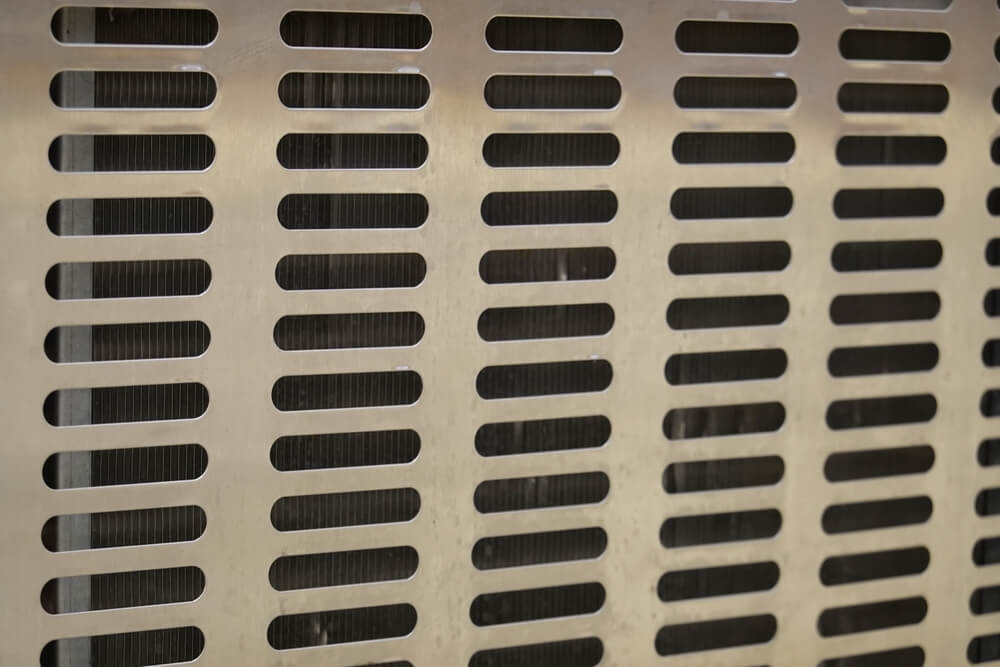
Perforated sheet metal is a material that is increasingly appearing in both engineering projects and modern architecture. Although its construction may seem simple, it brings a number of functional advantages and many applications. Thanks to perforations, it is possible to achieve effects that are difficult to obtain using other materials.
Perforated Sheet Metal – What Is It?
Perforated sheet metal is a sheet of metal that has undergone a mechanical process of creating holes of a specific shape, size, and arrangement. Specialized perforating presses are most commonly used for this. This process allows for the creation of a material that combines strength with permeability to air, light, or sound. The sheet can have round, square, elongated, or decorative perforations, depending on technical or aesthetic needs.
This type of material is used for both structural and decorative functions. Its properties mean it can be used in environments with high technical requirements, such as industry, as well as in architectural projects and interior designs. Thanks to the variety of perforation patterns, this type of sheet metal also becomes a means of expression in modern design.
Types of Perforations and Available Materials
Perforations can come in many configurations, from standard, symmetrical holes to more irregular ones, created to individual order. Round holes are the most common solution due to their versatility. Square or elongated perforations are suitable for applications requiring specific airflow or light transmission. Decorative perforations, designed for facades, suspended ceilings, or decorative covers, are also increasingly common.
Perforated sheet metal is produced from various types of metals, such as stainless steel, aluminum, brass, or galvanized steel. The choice of material depends primarily on the conditions in which it is to be used. Stainless steel is characterized by its corrosion resistance and is willingly used in the food or chemical industries. Aluminum, due to its lightness, works well in structures with limited load-bearing capacity. Galvanized steel, on the other hand, is an economical solution, often used in ventilation systems or fences.
Practical Applications of Perforated Sheet Metal
Perforated sheet metal is widely used in various branches of industry, from automotive, through construction, to the food sector. It can serve as a filtering, sound-dampening, or reinforcing element for structural components. In ventilation systems, it is used for the production of covers and ducts where it is necessary to ensure adequate airflow while maintaining the material's durability. In the food industry, it is used in sieves and screens that must meet hygiene standards.
Equally often, perforated sheet metal appears in architectural projects on building facades, as railings, sunshades, or partition walls. By combining durability with visual lightness, it can serve both an aesthetic and practical function simultaneously. Architects and interior designers also use it in commercial and public spaces where achieving a modern effect while maintaining the material's functionality is important.